
A Common and Frustrating Garage Door Problem
You press the button on your garage door remote, watch the door start its descent, and then — right before it reaches the floor — it reverses and goes back up. You try again. Same thing. Maybe it works on the third attempt, maybe it doesn't. Either way, you're standing in your driveway in Lucas wondering what just happened.
This is one of the most common garage door issues we get calls about at Lucas Garage Door. The good news is that it's usually fixable. The important thing is understanding what's causing it so you don't ignore a problem that could get worse — or try a DIY fix that creates a safety hazard.
How Your Garage Door's Safety System Works
Before we get into the causes, it helps to understand why your garage door is designed to reverse in the first place. Since 1993, all garage door openers sold in the United States have been required to include two safety features:
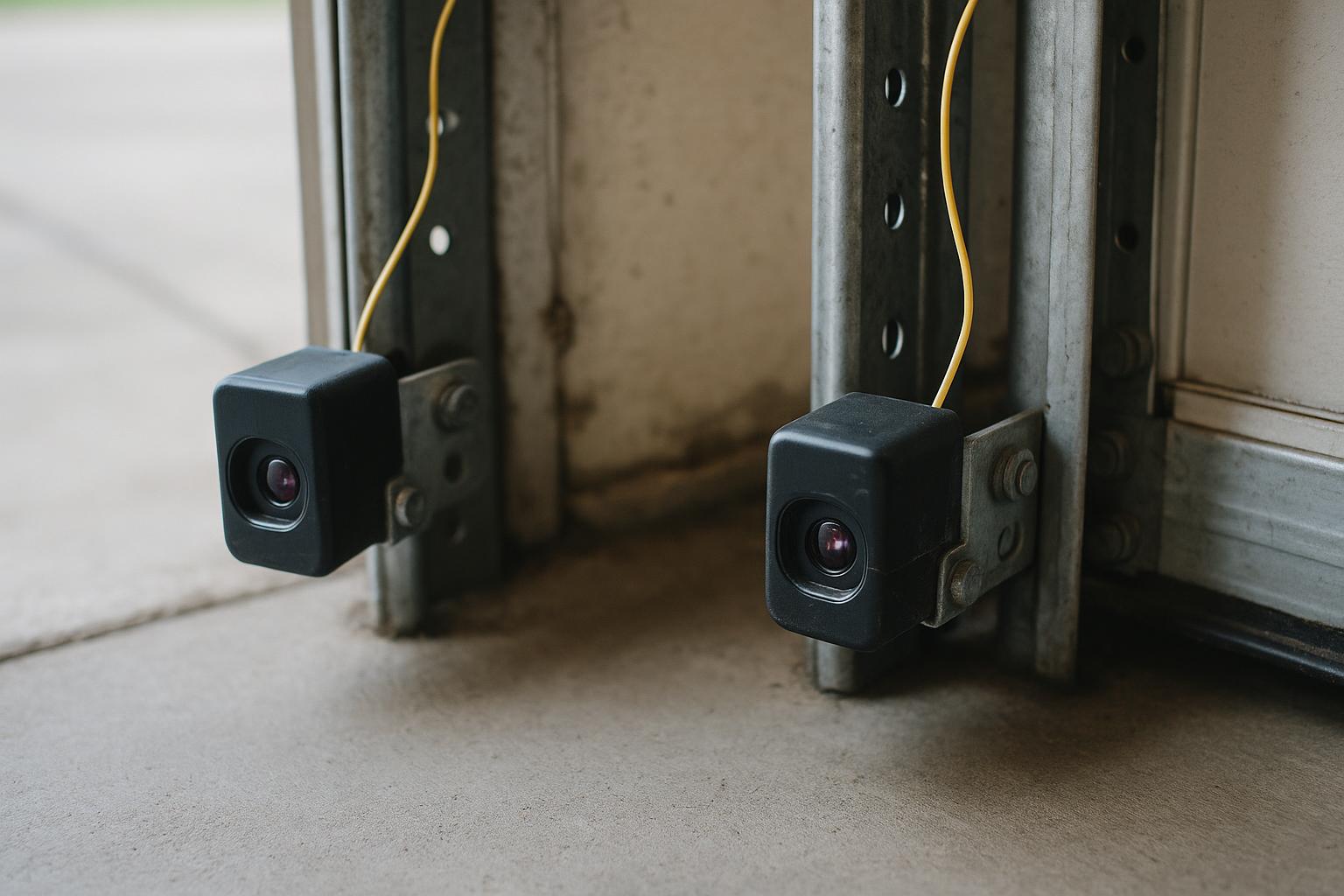
- Photo-eye sensors: These are the small sensors mounted near the bottom of your garage door tracks on either side. They send an invisible beam across the opening. If something breaks that beam — a child, a pet, a trash can — the door reverses to prevent injury or damage.
- Auto-reverse mechanism: If the door physically contacts an object while closing, the opener's force settings tell it to reverse direction immediately.
Both of these systems are critical for safety. When your door reverses unexpectedly, one of these systems is usually being triggered — sometimes for a legitimate reason, sometimes because something has gone wrong with the system itself.
The Most Common Causes of a Reversing Garage Door
1. Misaligned Photo-Eye Sensors
This is the number one reason we see garage doors reversing in homes across Lucas, Mansfield, and the surrounding area. The photo-eye sensors need to be precisely aligned to maintain their beam. Over time, they can get bumped, shifted by vibration, or knocked out of alignment by a stray bicycle or lawnmower. Even a small shift can cause the door to think something is blocking its path.
Check the indicator lights on both sensors. Most models show a steady green light on the receiving sensor when alignment is correct. If one light is flickering or off, that sensor likely needs to be repositioned.
2. Dirty or Obstructed Sensor Lenses
Ohio weather doesn't do your garage any favors. Dust, cobwebs, moisture, and even condensation can build up on the small lenses of your photo-eye sensors. When the lens is dirty enough, the beam can't connect, and the door reverses as if something is in the way.
A gentle wipe with a soft cloth can sometimes solve the problem instantly. It's one of the simplest fixes in garage door maintenance, but it's easy to overlook.
3. Damaged or Frayed Sensor Wiring
The wires running from your sensors back to the opener unit can become damaged over time. Mice and other rodents are common culprits — they chew through wiring in garages more often than most homeowners realize. Exposure to moisture can also corrode connections. If cleaning and realigning the sensors doesn't fix the reversing issue, damaged wiring is a strong possibility.
4. Incorrect Force or Travel Limit Settings
Your garage door opener has adjustable settings that control how much force the motor uses and how far the door travels in both directions. If the down-travel limit is set too far, the opener thinks the door has hit an obstruction when it reaches the floor, triggering the auto-reverse. Similarly, if the force setting is too low, the opener may not push the door down with enough power to complete the closing cycle, interpreting normal resistance as a blockage.
These settings can be adjusted on the opener unit itself, usually with small dials or buttons. However, setting the force too high can create a genuine safety hazard — the door won't reverse when it should. If you're not confident in making this adjustment, it's worth having a professional handle it.
5. Worn or Broken Springs
Your garage door springs do the heavy lifting — literally. They counterbalance the weight of the door so the opener doesn't have to work as hard. When springs wear out or break, the door becomes significantly heavier. The opener struggles to control it, and the added resistance during closing can trigger the auto-reverse mechanism.
If you hear a loud bang from your garage or notice the door feels unusually heavy when you try to lift it manually, a broken spring is the likely cause. Spring replacement is dangerous and should always be handled by a trained technician. The tension in these springs can cause serious injury if released improperly.
6. Track Problems or Roller Issues
Bent tracks, worn-out rollers, or debris in the track can all create friction and resistance that the opener interprets as an obstruction. As the door moves along a damaged section of track, the sudden increase in resistance triggers the safety reverse. You might also hear grinding, scraping, or popping sounds if this is the issue.
7. An Aging or Failing Opener
Garage door openers don't last forever. Most have a lifespan of 10 to 15 years, depending on usage and maintenance. As the motor and internal components wear down, the opener may struggle to operate the door consistently. Intermittent reversing — where the problem comes and goes — can be a sign that your opener is nearing the end of its useful life.
What You Can Safely Check Yourself
Before calling for service, there are a few things you can safely inspect:
- Look at the photo-eye sensors and check for steady indicator lights on both units.
- Wipe the sensor lenses with a clean, dry cloth.
- Check the area around the sensors and along the bottom of the door for any objects that might be triggering the beam.
- Visually inspect the sensor wires for obvious damage or disconnection.
- Listen for unusual sounds during operation that might indicate track or roller problems.
If none of these steps resolve the issue, or if you suspect a problem with springs, tracks, or the opener itself, it's time to call a professional.
When to Call Lucas Garage Door
A garage door that won't close properly isn't just an inconvenience — it's a security risk and a safety concern. An open garage is an invitation for theft, and a door that reverses unpredictably can be dangerous for anyone standing nearby.
At Lucas Garage Door, we diagnose and fix reversing issues for homeowners throughout Lucas, Bellville, Lexington, Ontario, Shelby, and the greater Mansfield area. Whether it's a simple sensor realignment or a complete spring replacement, we show up on time, explain what we find, and fix it right the first time.
If your garage door has been giving you trouble, don't keep pressing the button and hoping for the best. Contact us today to schedule a service call and get your garage door working reliably again.