
Winter and Your Garage Door: A Common Lucas, OH Problem
If you've lived in Lucas or anywhere in Richland County for more than a year, you know that Ohio winters don't hold back. Temperatures drop fast, snow piles up, and ice forms in places you'd never expect — including the bottom of your garage door.
Every winter, we get calls from homeowners who wake up late for work, press the garage door opener button, and nothing happens. Or the motor strains and groans but the door won't budge. It's frustrating, and when you're standing in a freezing garage at 6:30 in the morning, you need answers fast.
This post covers the most common reasons your garage door refuses to cooperate in cold weather and what you can do about each one — safely.
Your Garage Door Is Frozen to the Ground
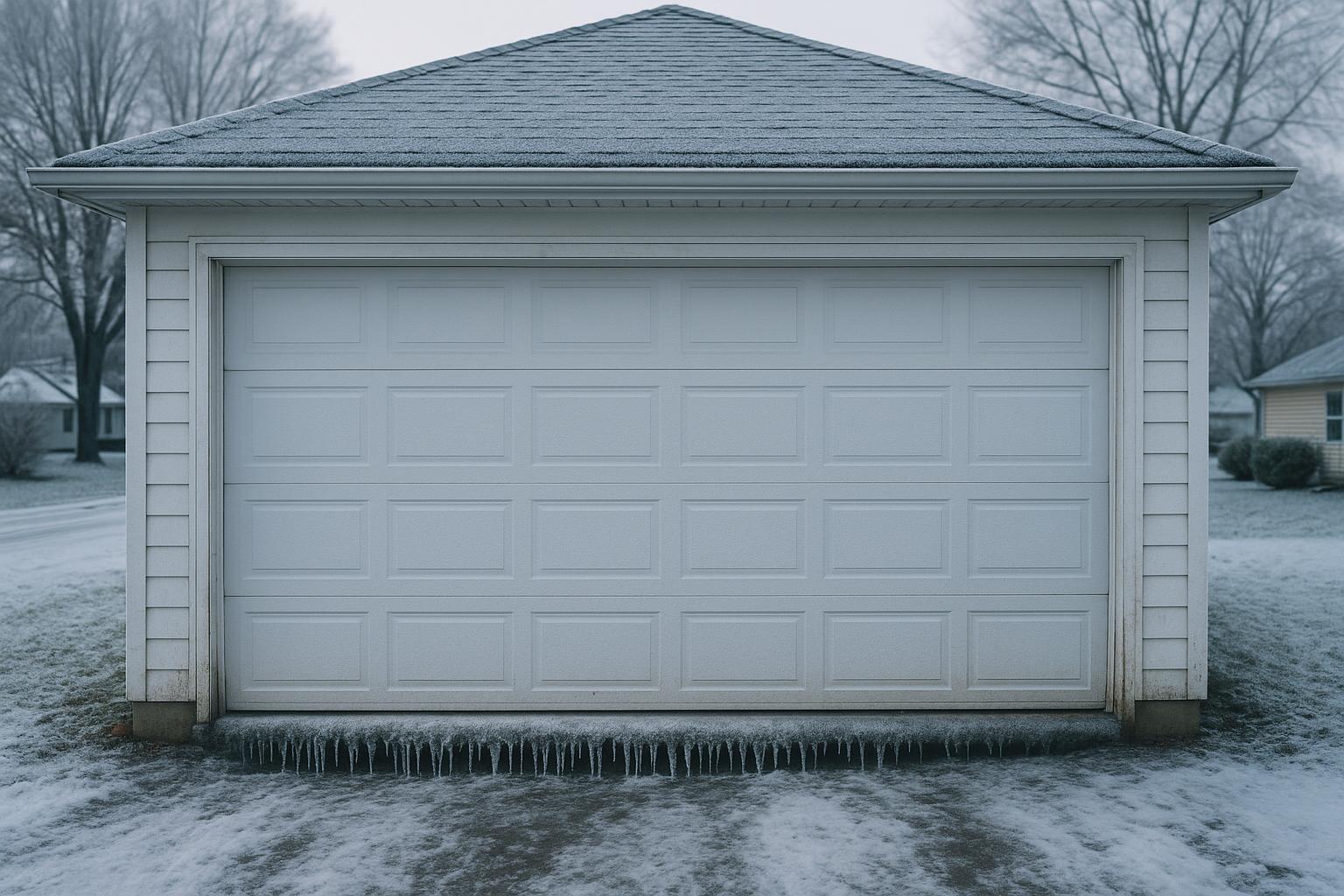
This is the number one cold-weather garage door issue we see. When snow melts during the day and refreezes overnight, water can seep under the bottom seal of your garage door and create an ice bond between the door and the concrete floor.
When you hit the opener button, the motor tries to lift the door, but the ice holds it in place. You might hear the opener straining or see the door flex slightly without actually rising.
What You Should Do
- Never force it. Repeatedly pressing the button while the door is frozen can burn out your opener motor, strip gears, or damage the door panels.
- Use a heat source carefully. A hair dryer or heat gun on a low setting can melt the ice along the bottom seal. Work slowly from one side to the other.
- Apply a de-icer. A commercial de-icing product or even table salt along the bottom edge can help break the bond. Avoid using boiling water — it can refreeze quickly and make the problem worse.
- Gently tap the ice free. Use a flat shovel or a rubber mallet to carefully break the ice seal. Don't use a metal tool directly against the door, as it can dent or scratch the panels.
Metal Parts Contract in the Cold
Your garage door system is full of metal components — tracks, springs, hinges, rollers, and hardware. When temperatures drop below freezing, metal contracts. This contraction can cause several issues:
- Tighter tracks: The metal tracks can shrink slightly, creating more friction as the rollers try to move through them.
- Stiff springs: Torsion and extension springs lose some of their flexibility in extreme cold, making it harder for them to do their job of counterbalancing the door's weight.
- Brittle components: Older or worn-out metal parts are more likely to snap in cold weather. This is especially true for springs that are already near the end of their lifespan.
What You Should Do
Keep all moving parts lubricated with a silicone-based garage door lubricant. Unlike WD-40 or grease, silicone spray won't thicken or freeze in cold temperatures. Apply it to the springs, hinges, rollers, and tracks at least once before winter sets in, and again mid-season if temperatures stay consistently low.
If your springs are more than seven or eight years old, consider having them inspected before winter arrives. A spring that breaks in January is more than an inconvenience — it can leave you stranded and potentially cause injury.
The Garage Door Opener Struggles in Cold Weather
Your garage door opener is an electromechanical device, and cold weather affects both sides of that equation. The electrical components can behave differently in extreme cold, and the mechanical parts face more resistance from a stiff, heavy door.
Common opener issues in winter include:
- Thickened lubricant in the motor: The grease inside the opener's gear assembly can thicken, making the motor work harder.
- Reduced battery life in remotes and keypads: If your wall-mounted keypad or car remote seems unresponsive, the battery may be weakened by the cold.
- Sensitivity settings: Most modern openers have force settings that tell the motor how hard to push or pull. A door that's stiffer in winter may exceed the opener's force threshold, causing it to stop or reverse as a safety precaution.
What You Should Do
Start by replacing the batteries in your remote and keypad — it's a simple fix that solves the problem more often than you'd think. If the opener motor is running but the door isn't moving, the force settings may need adjustment. Your owner's manual will show you where the force adjustment screws are, but if you're not comfortable making that change yourself, a professional can handle it quickly.
If the motor isn't running at all, check that the outlet has power. Cold weather can trip GFCI outlets in garages. Press the reset button on the outlet and try again.
Weatherstripping Has Worn Out or Hardened
The rubber weatherstripping along the bottom and sides of your garage door serves two purposes: it keeps cold air, water, and pests out, and it creates a seal that helps the door close smoothly. Over time, this rubber dries out, cracks, and hardens — especially after repeated freeze-thaw cycles.
Hardened weatherstripping doesn't flex properly, which means it can stick to wet concrete and freeze in place. It also loses its insulating ability, letting cold air pour into your garage and making the space feel like an icebox.
What You Should Do
Inspect your bottom seal and side weatherstripping at least once a year. If the rubber is cracked, brittle, or no longer makes solid contact with the floor, it's time to replace it. New weatherstripping is affordable and makes a noticeable difference in both door performance and garage temperature.
Preventive Steps to Winter-Proof Your Garage Door
The best way to avoid cold-weather garage door problems is to prepare before the first freeze. Here's a simple checklist for homeowners in Lucas and the surrounding areas:
- Lubricate all moving parts with a silicone-based spray before temperatures drop.
- Inspect springs, cables, and rollers for signs of wear or rust.
- Replace worn weatherstripping along the bottom and sides of the door.
- Test the opener's force and travel settings to make sure they're properly calibrated.
- Clear debris and moisture from the area where the door meets the floor.
- Schedule a professional maintenance visit to catch small problems before they become big ones in the middle of winter.
When to Call a Professional
Some winter garage door issues are easy to handle on your own — replacing batteries, applying lubricant, or melting a thin layer of ice. But other problems require professional help:
- A spring has broken or looks stretched and worn
- The door is visibly off-track or crooked
- The opener motor runs but the door doesn't move at all
- Cables appear frayed or loose
- The door is severely damaged from ice or impact
Garage door springs and cables are under extreme tension and can cause serious injury if handled incorrectly. If you're dealing with any of these issues, it's safer and faster to call in a professional.
Stay Warm, Stay Safe
A garage door that won't open on a freezing morning is one of those problems that feels small until it happens to you. The good news is that most cold-weather garage door issues are preventable with a little maintenance and awareness.
If you're in Lucas, Mansfield, Bellville, Lexington, Ontario, or Shelby and your garage door is giving you trouble this winter, Lucas Garage Door is here to help. We offer same-day service when possible, and we'll get your door back on track — no matter how cold it gets outside.