
Your Garage Door Shouldn't Sound Like That
You press the button on your garage door opener, and instead of the smooth, quiet hum you're used to, you hear grinding, squealing, rattling, or a loud bang. It's the kind of sound that makes you stop and wonder — is something about to break?
If your garage door has started making unusual noises, you're not alone. It's one of the most common concerns we hear from homeowners in Lucas and the surrounding areas. The good news is that most garage door noises point to identifiable problems, many of which can be resolved before they turn into expensive repairs or a complete door failure.
Let's walk through the most common garage door sounds, what causes them, and what you should do about each one.
Squealing or Screeching Sounds
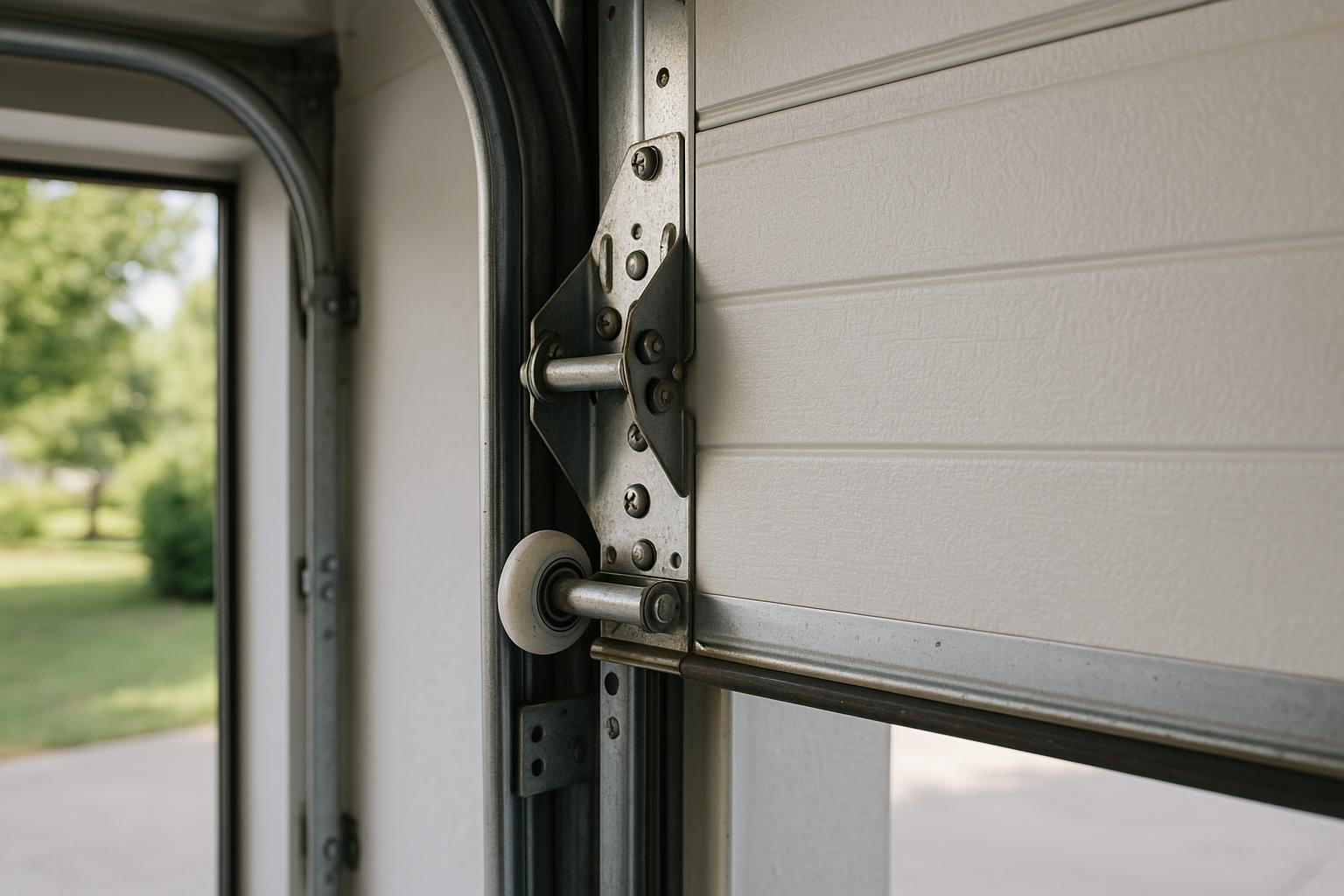
A high-pitched squeal when your garage door opens or closes is usually a lubrication issue. Over time, the metal components of your garage door system — including rollers, hinges, tracks, and springs — lose their lubrication and begin grinding against each other.
What to do: Apply a garage door-specific lubricant (not WD-40, which is a solvent, not a long-term lubricant) to all moving metal parts. Focus on the rollers, hinges, spring coils, and the bearing plates at the top of the door. If the squealing continues after lubrication, the rollers themselves may be worn out and need replacement.
Metal rollers are especially prone to this. If your door still uses the original steel rollers, upgrading to nylon rollers can dramatically reduce noise and extend the life of the system.
Grinding or Scraping Noises
A grinding sound usually means something is rubbing where it shouldn't be. The most common culprit is a misaligned track. When the vertical or horizontal tracks shift even slightly, the door's rollers can scrape against the edges of the track as the door moves.
What to do: Visually inspect the tracks on both sides of the door. Look for gaps between the rollers and the track, bends, or sections where the track has shifted away from the wall. Minor alignment issues can sometimes be corrected by tightening the mounting brackets, but significant misalignment should be handled by a professional to avoid making the problem worse.
Grinding can also come from a worn gear inside your garage door opener, particularly in chain-drive models. If the grinding seems to originate from the opener unit on the ceiling rather than the door itself, the internal gear assembly may need to be replaced.
Rattling and Vibrating
Rattling is one of the most common garage door complaints, and it often has the simplest fix. Loose hardware — nuts, bolts, screws, and brackets — naturally vibrates loose over time due to the constant motion and vibration of the door.
What to do: Grab a socket wrench and tighten all the bolts on the door's hinges, roller brackets, and track mounting brackets. Check the bolts that secure the opener rail to the header bracket above the door as well. While you're at it, inspect the chain or belt on your opener. A loose chain will slap and rattle during operation and may need to be adjusted for proper tension.
If you have a chain-drive opener and the rattling is driving you crazy, it may be worth considering an upgrade to a belt-drive opener, which operates much more quietly.
Popping or Snapping Sounds
A popping sound when the door starts moving can indicate a problem with the torsion springs. As springs age, they can develop rough spots or slight deformities that cause them to pop or snap as they wind and unwind. This is different from a spring breaking, which produces a single loud bang (more on that below).
What to do: Lubricating the springs can sometimes resolve minor popping. However, if the popping is consistent and getting louder, it may be a sign that the springs are nearing the end of their lifespan. Spring work is dangerous and should always be handled by a trained technician. The tension stored in garage door springs can cause serious injury if they're handled improperly.
A Single Loud Bang
If you heard one sudden, loud bang — almost like a gunshot — coming from your garage, there's a strong chance a torsion spring has broken. This is unmistakable. Many homeowners in Lucas and Mansfield have told us they initially thought something had fallen in the garage or that someone had broken in.
What to do: Do not attempt to operate the door. A broken spring means the door has lost the counterbalance system that makes it safe to open and close. Running the opener with a broken spring puts extreme stress on the opener motor and can cause the door to come crashing down. Call a professional for emergency service right away.
Banging When the Door Closes
If your garage door slams shut the last foot or so instead of closing gently, the springs may be losing tension or the opener's closing force and travel limits may need adjustment. A door that bangs shut is not only annoying — it's putting unnecessary stress on the door panels, the track, and the opener mechanism with every cycle.
What to do: Check your opener's settings. Most modern openers have adjustment screws or digital settings for travel limits and force. Reducing the closing force or adjusting the down travel limit can sometimes solve the problem. If adjustments don't help, the springs may need to be re-tensioned or replaced by a professional.
Humming Without Movement
If you hear the opener motor humming or straining but the door doesn't move, the opener may have stripped its drive gear, or the door could be locked or obstructed. In cold Ohio winters, it's also possible that the weatherstripping along the bottom of the door has frozen to the garage floor.
What to do: First, check that the door isn't manually locked. Then disconnect the opener by pulling the emergency release cord and try lifting the door by hand. If it won't budge, look for obstructions or ice along the bottom seal. If the door moves freely by hand but the opener still just hums, the internal gears in the opener likely need to be replaced.
When to Call a Professional
Some garage door noises are simple maintenance items you can handle on a Saturday afternoon. Tightening bolts, lubricating moving parts, and adjusting opener settings are all reasonable DIY tasks. But there are situations where calling a professional is the safest and smartest choice:
- Broken or worn springs — Never attempt to adjust or replace these yourself.
- Significant track misalignment — A door that's come off the track or has badly bent rails needs professional attention.
- Opener motor or gear failure — Internal opener repairs require specific parts and expertise.
- Persistent noise after basic maintenance — If you've lubricated and tightened everything and the noise continues, there may be a deeper issue.
At Lucas Garage Door, we help homeowners and businesses across Lucas, Mansfield, Bellville, Lexington, Ontario, and Shelby diagnose and fix noisy garage doors every week. Whether it's a simple tune-up or a more involved repair, we show up on time, explain what we find, and give you honest recommendations.
Don't Ignore the Warning Signs
A noisy garage door is trying to tell you something. Catching a small problem early — a dry hinge, a loose bolt, a roller that's starting to wear — can save you from a much bigger repair bill down the road. If your garage door has started making sounds that don't seem right, give us a call or schedule a maintenance visit. We'll get it running quietly and smoothly again.