
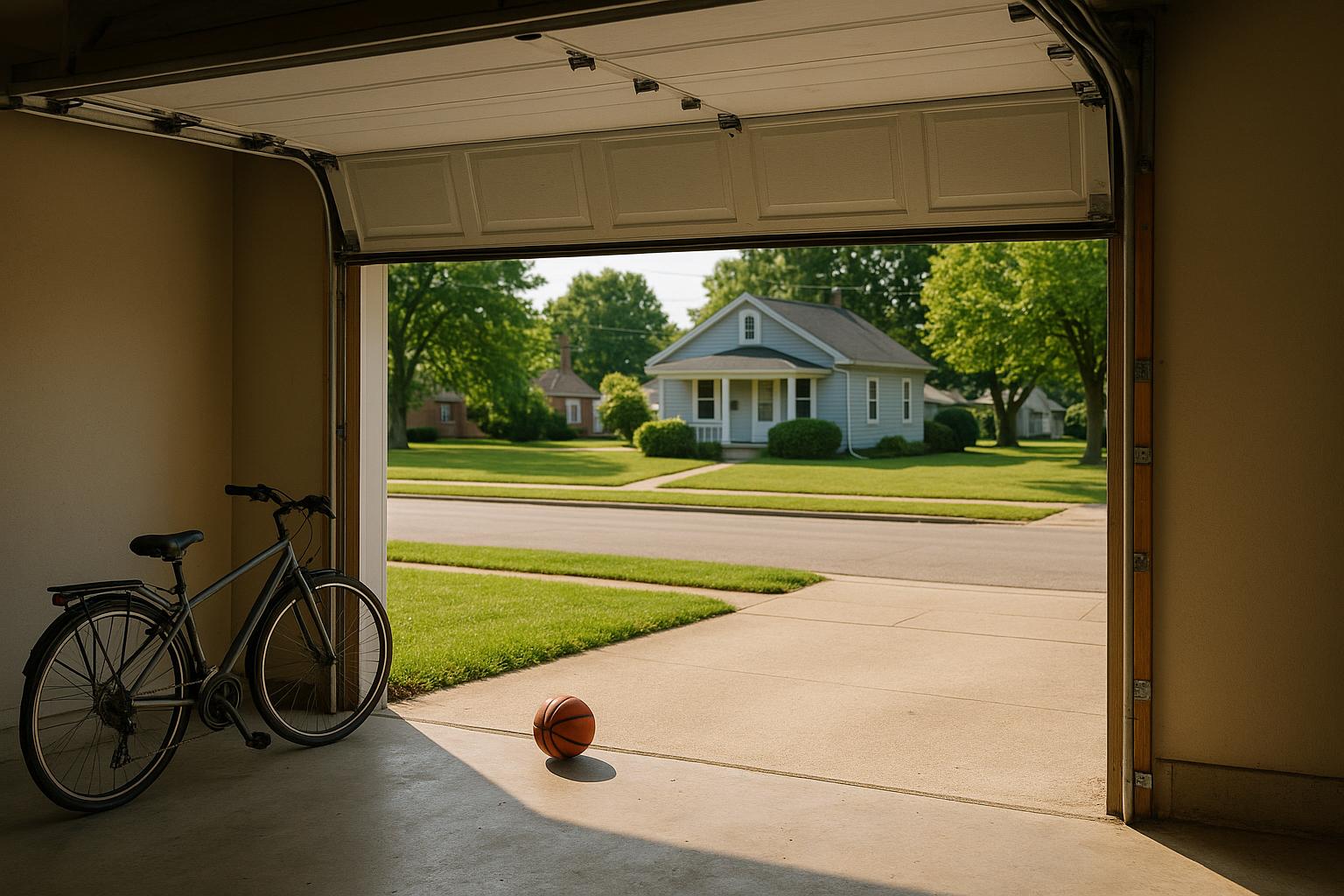
Your Garage Door Is Powerful — And Kids Don't Know That
Most homeowners don't think of their garage door as dangerous. It goes up, it comes down, and it works so reliably that it fades into the background of daily life. But here's a fact worth remembering: your garage door is the single heaviest moving object in your home. A standard residential garage door weighs between 130 and 400 pounds, and the springs and opener that move it generate serious force.
For families in Lucas and the surrounding communities, the garage is often more than just a place to park the car. It's a workshop, a play zone on rainy days, and the main entry point to the house. That means kids are around the garage door constantly — and they don't always understand the risks.
The good news is that keeping your family safe doesn't require anything extreme. A combination of regular maintenance, modern safety features, and a few household rules can dramatically reduce the chance of an accident.
Understanding the Real Risks
According to the U.S. Consumer Product Safety Commission, thousands of people are injured by garage doors each year, and children are disproportionately affected. The most common injuries include:
- Crush injuries from a closing door landing on a child or their fingers getting caught between panels
- Entanglement in springs, cables, or chains that are exposed or within reach
- Entrapment when a child is caught under a door that doesn't reverse properly
- Impact injuries from playing near a moving door or hanging on it as it operates
These aren't scare tactics — they're real scenarios that happen in homes just like yours. The goal isn't to make you anxious, but to help you take practical steps to prevent them.
Make Sure Your Safety Features Actually Work
If your garage door opener was manufactured after 1993, federal law requires it to include two key safety mechanisms: auto-reverse and photoelectric sensors. But having them installed and having them work properly are two different things.
Test the Auto-Reverse Function
Place a 2x4 piece of wood flat on the ground in the path of the door. Press the button to close it. When the door contacts the wood, it should immediately reverse direction and go back up. If it doesn't, your opener needs adjustment or repair right away.
We recommend testing this once a month. It takes about 30 seconds and could prevent a serious injury.
Check the Photoelectric Sensors
These are the small sensors mounted near the floor on either side of your garage door opening. They project an invisible beam across the doorway, and if anything breaks that beam while the door is closing, the door should stop and reverse.
Make sure the sensors are properly aligned, clean, and unobstructed. If the indicator lights are blinking or the door won't close with the sensors active, don't just override the system — call a professional to diagnose the problem.
Establish Garage Door Rules for Your Kids
Technology is important, but teaching your children how to behave around the garage door is just as critical. Here are some straightforward rules that every family should adopt:
- Never run under a moving garage door. Even if it looks like there's plenty of time, the door can change speed or a malfunction can occur.
- Never play with the wall button or remote controls. Garage door remotes should be stored out of reach of small children, just like you would with any other potentially dangerous tool.
- Keep fingers away from the door panels. The gaps between sections are pinch points that can cause painful injuries when the door is in motion.
- Never hang on the door or try to ride it. This might seem obvious to adults, but kids are naturally curious and adventurous.
- Stay clear of springs, cables, and tracks. Teach older children that the hardware on a garage door is under extreme tension and should never be touched.
Keep Up with Regular Maintenance
A well-maintained garage door is a safer garage door. When parts wear out, the door becomes unpredictable — it might close too fast, fail to reverse, or drop unexpectedly. For families with children, that unpredictability is unacceptable.
Here's what regular maintenance should include:
- Visual inspection of springs and cables — Look for signs of rust, fraying, or wear. If anything looks off, don't touch it yourself. Garage door springs are under extreme tension and should only be handled by a trained technician.
- Lubrication of moving parts — Rollers, hinges, and tracks should be lubricated every few months to keep the door moving smoothly and quietly.
- Balance test — Disconnect the opener and manually lift the door halfway. If it doesn't stay in place, the springs may be wearing out and the door could be unbalanced, which puts extra strain on the opener and safety systems.
- Hardware tightening — Vibration from daily use can loosen bolts and brackets over time. A quick check with a socket wrench can prevent bigger problems.
- Weatherseal inspection — Damaged seals along the bottom and sides of the door can let in pests, moisture, and debris that interfere with the door's operation.
If you're not comfortable doing these checks yourself, scheduling an annual maintenance visit with a local garage door company is a smart investment. Here at Lucas Garage Door, we see families throughout Lucas, Mansfield, Bellville, and Lexington who make annual tune-ups part of their home safety routine.
Upgrade Older Openers and Doors
If your garage door opener is more than 20 years old, it may lack the safety features that are standard on modern units. Older openers may not have photoelectric sensors, rolling code technology, or reliable auto-reverse mechanisms.
Upgrading to a newer opener isn't just about convenience — it's about safety. Modern openers from brands like LiftMaster and Chamberlain include features such as:
- Battery backup so the door still operates during a power outage
- Timer-to-close functions that automatically shut the door if you forget
- Smartphone connectivity so you can monitor whether the door is open or closed from anywhere
- Enhanced force sensitivity for more reliable auto-reverse performance
If your garage door panels are old, dented, or damaged, they may also be worth replacing. Newer doors are built with pinch-resistant panel designs that significantly reduce the risk of finger injuries — a feature that's especially important in homes with young children.
What to Do If Something Seems Wrong
Trust your instincts. If your garage door is behaving erratically — jerking during operation, not reversing when it should, closing too quickly, or making unusual sounds — don't wait to address it. A small issue can become a safety hazard quickly.
Disconnect the opener and operate the door manually until you can have it inspected. And if you're in the Lucas, Ohio area, give us a call. We offer prompt service and can assess whether your door and opener are operating safely for your family.
Safety Is an Ongoing Commitment
Childproofing your garage door isn't a one-time project. Kids grow, technology ages, and parts wear out. The best approach is to combine working safety features, clear household rules, and consistent maintenance into a routine you revisit throughout the year.
Your garage door should make life easier, not put your family at risk. A little attention goes a long way toward making sure it stays that way.