
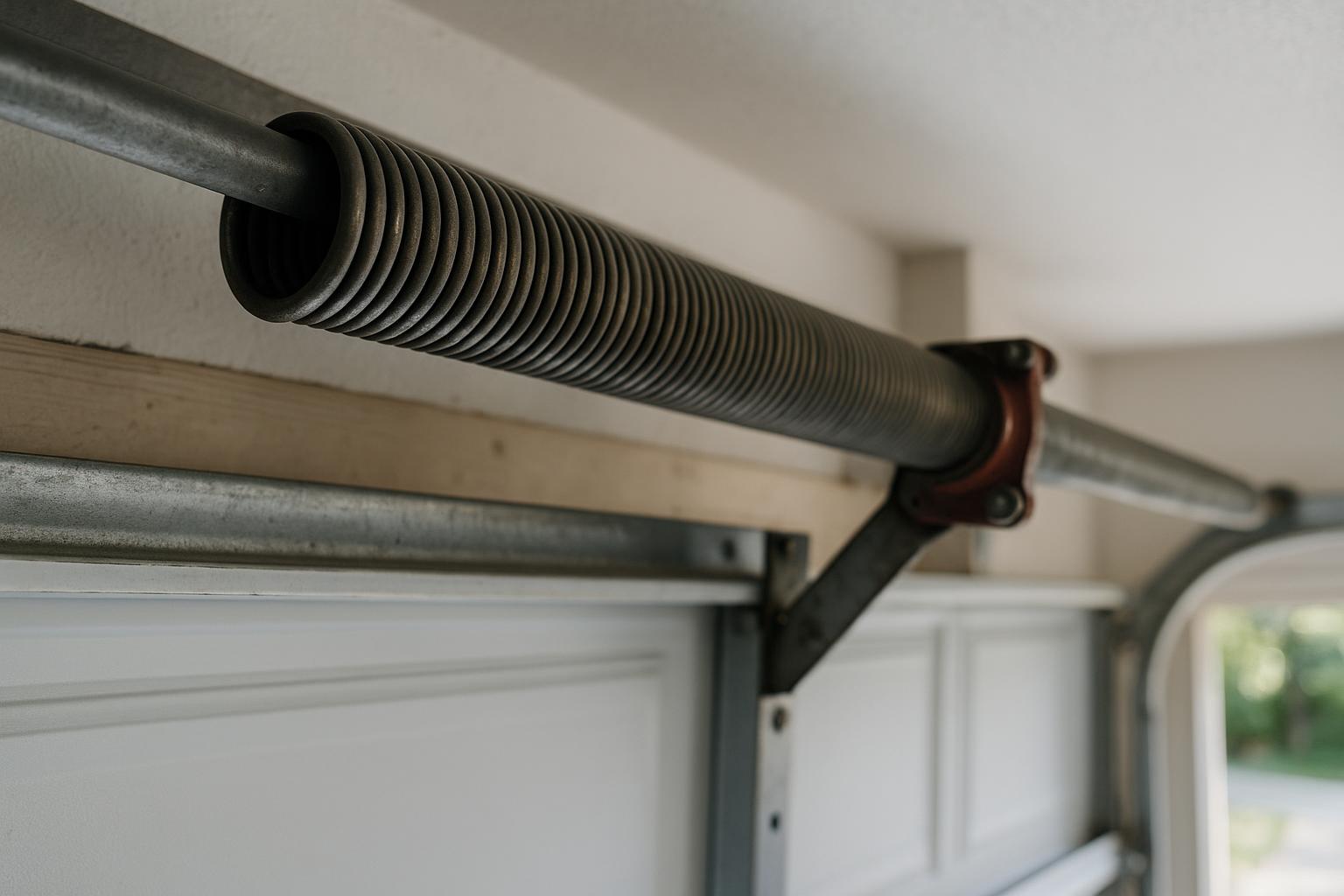
Your Garage Door Springs Are Doing More Work Than You Think
Every time you open and close your garage door, the springs are doing the heavy lifting — literally. A standard two-car garage door can weigh between 150 and 250 pounds, and it's the springs that counterbalance all that weight so your opener doesn't have to muscle it up on its own. Without properly functioning springs, your garage door is essentially a giant slab of metal or wood that isn't going anywhere.
For homeowners in Lucas and the surrounding area, garage door springs take a beating through our Ohio seasons. From the freezing winters to the humid summers, temperature swings put extra stress on the metal, causing it to expand and contract repeatedly. That wear adds up over time, and eventually, every spring reaches the end of its lifespan.
So how do you know when it's time for a replacement? Let's break it down.
How Long Do Garage Door Springs Typically Last?
The lifespan of a garage door spring is measured in cycles. One cycle equals one full open and one full close of the door. Most standard torsion springs are rated for approximately 10,000 cycles, which translates to roughly 7 to 10 years of average use for a typical household.
However, that number can vary significantly depending on several factors:
- Frequency of use: If you use your garage door as your primary entry point to your home — which many families in Lucas and Mansfield do — you might be cycling it four to six times a day instead of two. That cuts the spring's lifespan considerably.
- Spring quality: Not all springs are created equal. Higher-quality, high-cycle springs rated for 20,000 or even 25,000 cycles are available and can last significantly longer.
- Maintenance: Springs that are regularly lubricated and inspected tend to last longer than neglected ones.
- Climate: Cold weather makes metal more brittle. If your garage isn't insulated, the springs endure more thermal stress through our Ohio winters.
Torsion Springs vs. Extension Springs: What's the Difference?
Before we go further, it helps to understand the two main types of garage door springs:
Torsion Springs
These are mounted on a metal shaft directly above the garage door opening. They use torque to lift the door and are the more common type found on modern garage doors. Torsion springs tend to be more durable, offer smoother operation, and are generally safer when they do eventually break.
Extension Springs
These run along the horizontal tracks on both sides of the door. They stretch and contract to provide lifting force. Extension springs are typically found on older or lighter garage doors. They're less expensive but tend to wear out faster and can be more dangerous when they snap if safety cables aren't installed.
If your home in Lucas or the surrounding communities like Bellville, Lexington, or Ontario still has extension springs, it may be worth considering an upgrade to torsion springs during your next replacement.
Warning Signs Your Garage Door Springs Are Wearing Out
Springs rarely fail without giving you some warning signs first. Here's what to watch for:
- The door feels heavier than usual: Try lifting your garage door manually by pulling the emergency release cord. If the door feels noticeably heavy or difficult to lift, the springs are losing their tension.
- The door doesn't stay open: A properly balanced garage door should stay in place when you lift it halfway and let go. If it slides down, the springs aren't providing enough counterbalance.
- Visible gaps in the spring coils: Look at your torsion spring above the door. If you see a visible gap or separation in the coils, the spring has already broken.
- Loud bang from the garage: Many homeowners first discover a broken spring when they hear a loud bang — like a gunshot — coming from the garage. That's the sound of a torsion spring snapping under tension.
- The opener is straining: If your garage door opener sounds like it's working harder than normal, grinding or struggling to lift the door, worn springs may be forcing it to compensate for the lost counterbalance.
- The door opens unevenly: If one side of the door lifts higher than the other, one of your springs (or one side of your extension spring system) may be failing.
Can You Replace Garage Door Springs Yourself?
We understand the DIY spirit — it's strong here in Lucas and throughout Richland County. But garage door spring replacement is one job we strongly recommend leaving to professionals. Here's why:
Torsion springs are under extreme tension. A spring rated to lift a 200-pound door stores a tremendous amount of energy. If it's released improperly, it can cause serious injury or even death. Emergency rooms across the country treat garage door spring injuries every year, and many of those injuries happen to homeowners attempting DIY repairs.
Professional technicians have the proper tools, training, and experience to safely release the old springs and install new ones. The job typically takes less than an hour for an experienced technician, and the peace of mind is worth every penny.
Should You Replace One Spring or Both?
If your garage door has two torsion springs and one breaks, you might wonder if you can save money by replacing just the broken one. While it's technically possible, we almost always recommend replacing both springs at the same time.
Here's the reasoning: if one spring has reached the end of its lifespan, the other one is right behind it. They've endured the same number of cycles and the same conditions. Replacing both at once means:
- You avoid a second service call in a few weeks or months
- Both springs provide equal tension, keeping your door balanced
- You save on labor costs by doing it all in one visit
How Regular Maintenance Extends Spring Life
One of the best things you can do to get the most out of your garage door springs is to keep up with basic maintenance. At Lucas Garage Door, we recommend the following at least twice a year:
- Lubricate the springs: Use a silicone-based or lithium-based spray lubricant on the torsion springs. This reduces friction, prevents rust, and helps the coils move smoothly.
- Test the balance: Disconnect the opener and manually lift the door to the halfway point. If it stays in place, your springs are in good shape. If it falls or rises, they need attention.
- Visually inspect: Look for rust, corrosion, gaps in the coils, or any signs of wear.
- Listen for unusual sounds: Squeaking, grinding, or popping noises during operation can indicate spring problems.
If you'd rather not worry about remembering these steps, we offer maintenance plans that cover seasonal inspections and keep your entire garage door system running smoothly.
When to Call Lucas Garage Door
If you've noticed any of the warning signs mentioned above, or if it's been more than seven years since your springs were last replaced, it's a good idea to have them inspected. We serve homeowners throughout Lucas, Mansfield, Shelby, Ontario, Lexington, and Bellville with honest assessments and fair pricing.
Whether you need an emergency spring replacement or just want a professional to take a look and give you peace of mind, we're here to help. We show up on time, explain what we find, and never push services you don't need.
Don't wait for a broken spring to leave you stuck — or worse, cause an injury. Give us a call and let's make sure your garage door is safe and ready for whatever the season brings.